Perspective Core Hub
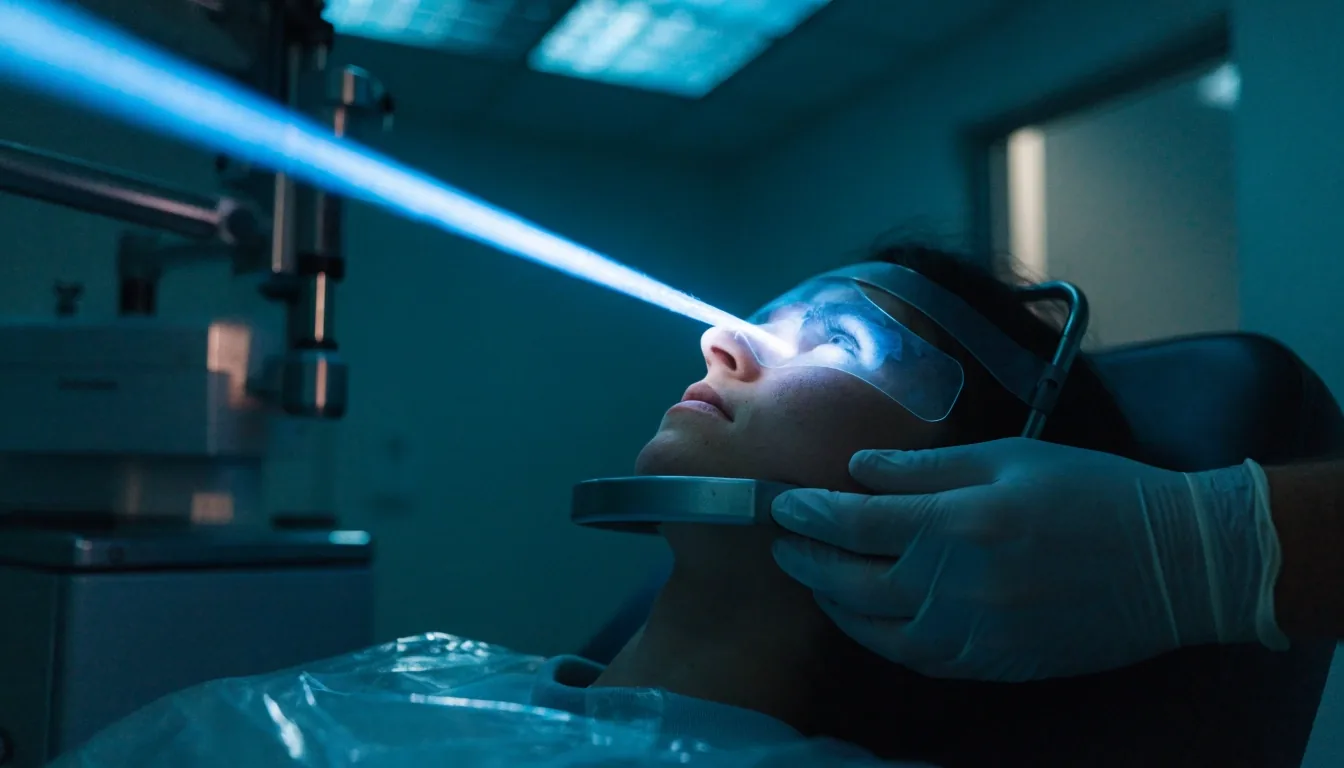
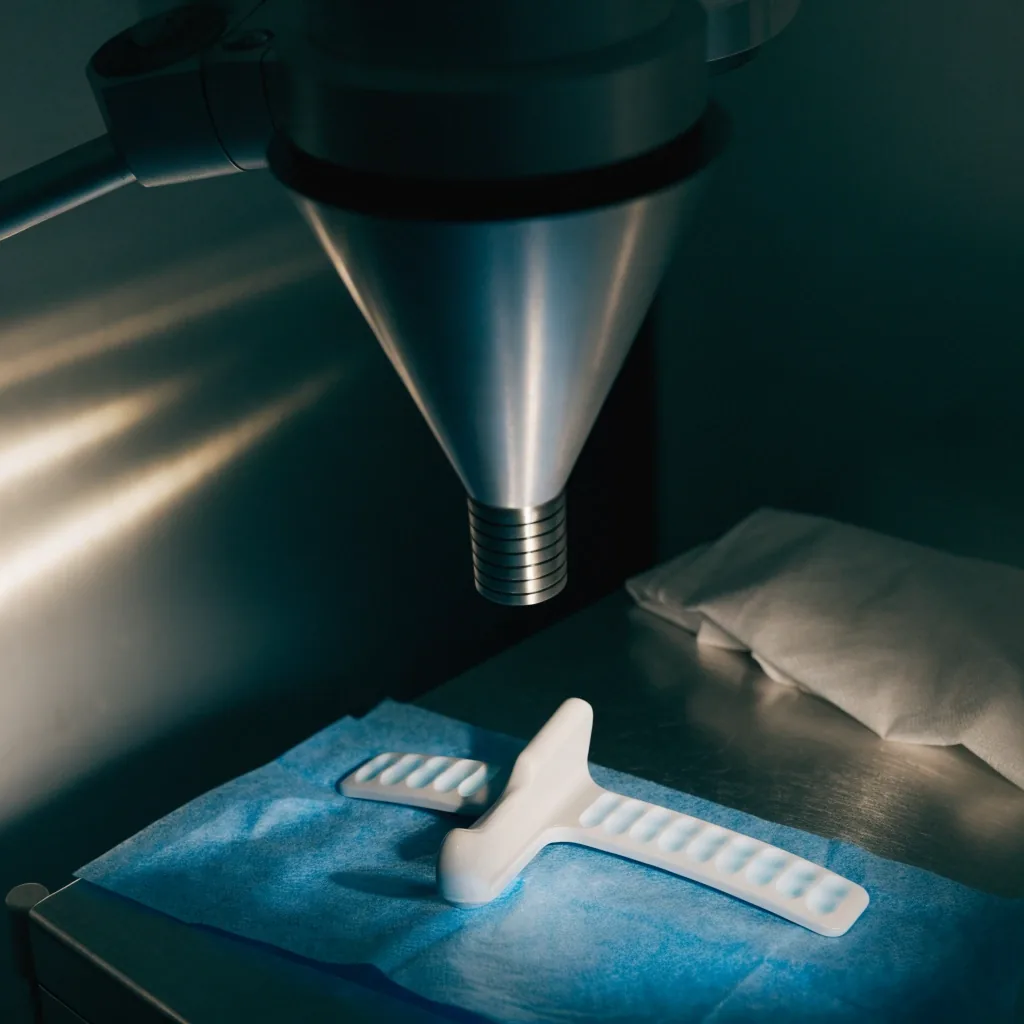
Laser delivery cone above a lid speculum on surgical drape in a dim refractive laser room

Flap and no-flap procedures compared

Ocular Surface & Recovery

The cornea's outer film decides how comfortable the first weeks feel. Here is how preservation, dry-eye risk and recovery timelines differ across SMILE, FS-LASIK and surface ablation.

Quick comparison of reflux, flap and surface-ablation recovery signatures

What the surface does
SMILE (no flap)
FS-LASIK (flap)
Surface ablation
Corneal nerve cut
Small peripheral cut
Broad flap-edge cut
Outer layer replaced
Dry-eye tendency
Often lowest of the three
Higher in the first weeks
Temporary while it re-epithelialises
First clear vision
Same day to next morning
Usually within hours
Several days as the layer regrows
Comfort in month one
Steady once lubricated
Settles with drops and rest
Slowest recovery, calmest surface after

Indicative of typical courses described by refractive surgeons; individual healing varies with baseline tear film, lid health and medication.

Starting point

The surface is the system that reacts to the laser

Before any laser touches the cornea, it has an outer film made of a watery layer, a mucus layer and a thin oily layer produced by the meibomian glands in the eyelids. That film is what keeps vision crisp between blinks. It is also the structure that decides how the eye reacts to a refractive procedure.

Surgery interrupts the small corneal nerves that tell the eye to blink, tear and repair itself. Refractive surgeons refer to this interruption as the reason behind the dry-eye sensations that sometimes follow corrective laser surgery. The size of the interruption depends on how the platform creates access to the tissue: through a small pocket, through a hinged flap, or by removing the outer layer entirely.

This page explains how far the surface is disturbed in each family of procedures, what the tear film does afterwards, and which recovery timelines are typical enough for a patient in Jakarta to plan around. It does not replace an individual dry-eye assessment — that comes from the diagnostic work your clinic performs.

Three routes through the cornea

The access route, not the laser wavelength, is what changes how the outer film behaves in the days after surgery. Here is how each family leaves the surface.

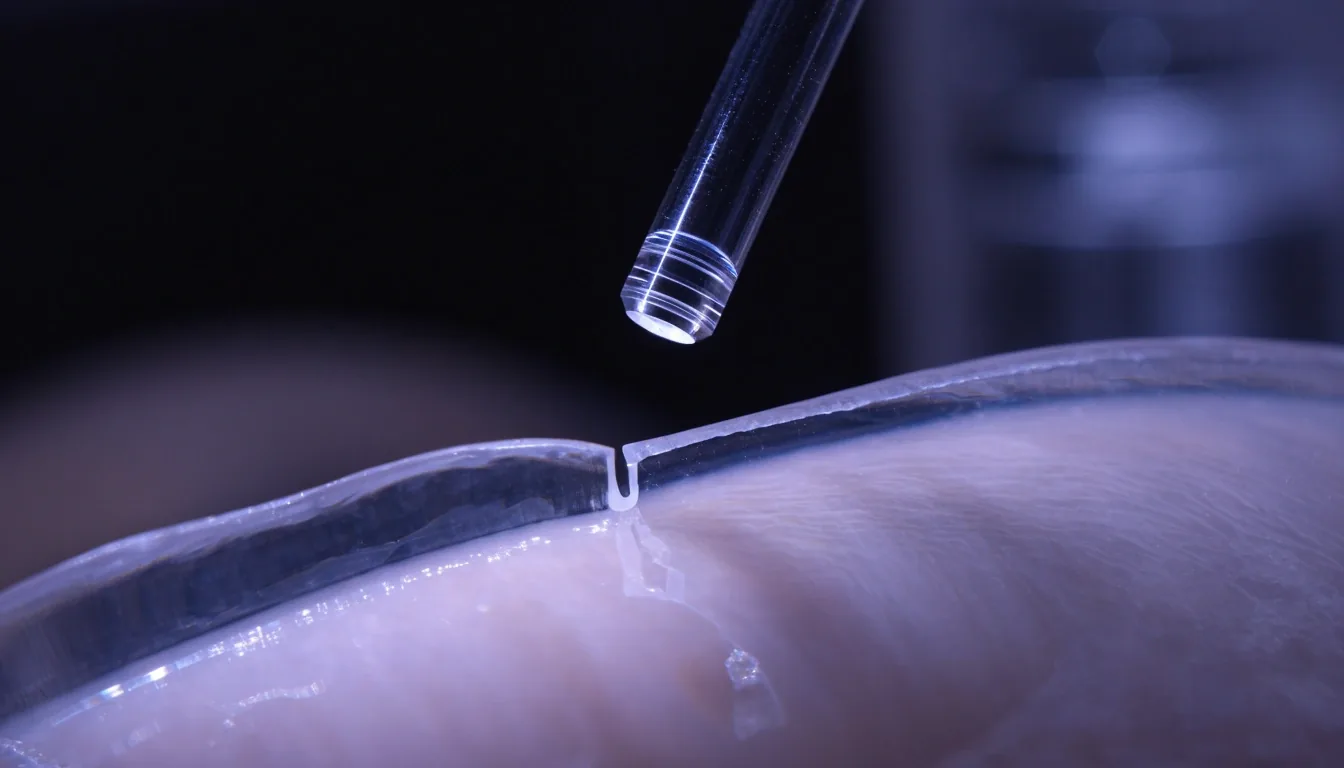
Macro view of a small side pocket cut in clear corneal tissue during a no-flap procedure

A femtosecond laser creates a small pocket for tissue removal — the closed route.

No-flap approach

SMILE and small-incision extraction

A femtosecond platform carves a lens-shaped layer inside the cornea and the surgeon removes it through a small peripheral opening. Because a flap is never raised, the outer epithelial layer stays largely intact, and fewer nerves at the surface are severed. In practice SMILE often reads as the friendlier option for patients who arrive with a borderline tear film, and dry-eye symptoms after treatment tend to be milder and to settle earlier. Comfort during the first month is generally steady once lubricants are used as prescribed.
Flap approach

Femtosecond LASIK

A femtosecond ring creates a thin hinged flap that is folded back, the excimer reshapes the bed underneath, and the flap returns into place. The approach preserves the surface epithelium, so vision usually sharpens within hours, but the flap edge separates part of the superficial nerve network. Patients with an already dry surface can notice more irritation in the first weeks, and many clinics pre-treat with lubricants for exactly that reason.

Surface approach

Surface ablation, TransPRK, PRK

The outer epithelium is removed and the excimer works directly on the surface layer beneath it. No flap is cut, which is why this family is frequently chosen for thinner corneas or contact-sport athletes. Recovery is the slowest of the three because the epithelium must grow back, but once it does, the surface layer stays undisturbed. Dryness is more pronounced for a few days and then typically tracks back to baseline as the regrowth matures.

What the first month usually looks like

Laser surgery recovery is not a straight line — the notable moments cluster in the first days, then flatten out. A typical course through each window:

Day of surgery

Numbing drops wear off after a couple of hours. Watering and a gritty feeling are common, and clinics usually ask for an eye shield overnight for the flap-based routes.

Days one to three

Flap and no-flap patients are typically back to light screen work. Surface ablation patients are the slowest — the epithelium is still closing, and light sensitivity is strongest here.

Week one

Vision is usable for most people in the flap and no-flap groups, but fluctuates between drops. Lubricant use is at its highest frequency and stitch-free PRK patients may still be in a bandage contact lens.

Week one to week four

Tear film settles toward its new baseline. Flap-based dryness usually reduces noticeably, SMILE comfort is already steady, and surface-ablation vision closes in on its longer-term level.

Also worth preparing for

  • Screens dry eyes faster — take a break every twenty minutes for the first fortnight.
  • Air-conditioned Jakarta offices and night-time fans tend to worsen the sensation; a humidifier helps.
  • Preservative-free lubricants are often preferred during the first month for frequent use.
  • Swimming and direct sun exposure are usually paused for a defined stretch — ask your surgeon for the exact window.
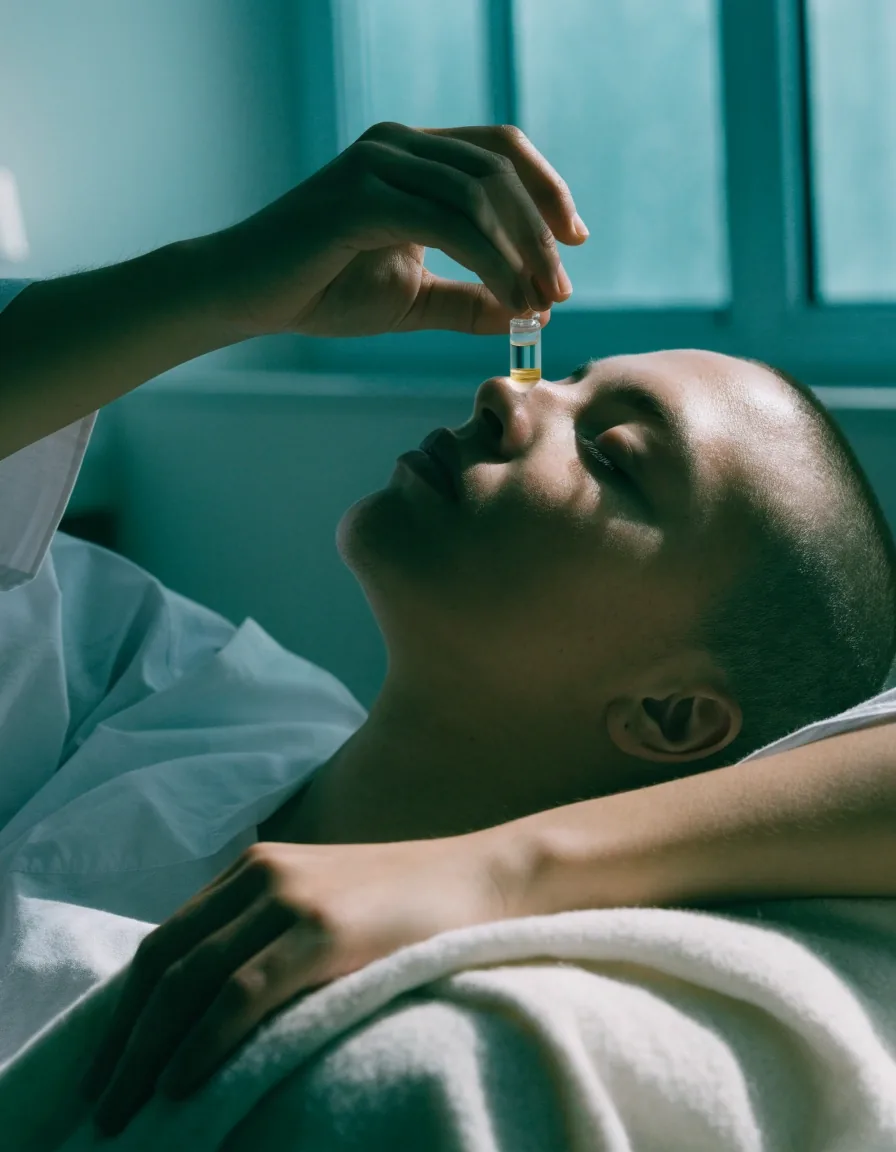
Hand holding a small preservative-free lubricant vial beside a relaxed eye

The honest caveat

Every technique here leaves the surface with a temporary change in sensation and lubrication. What differs is how long the tear film takes to find its new balance — and that response is individual, not guaranteed by any single platform.

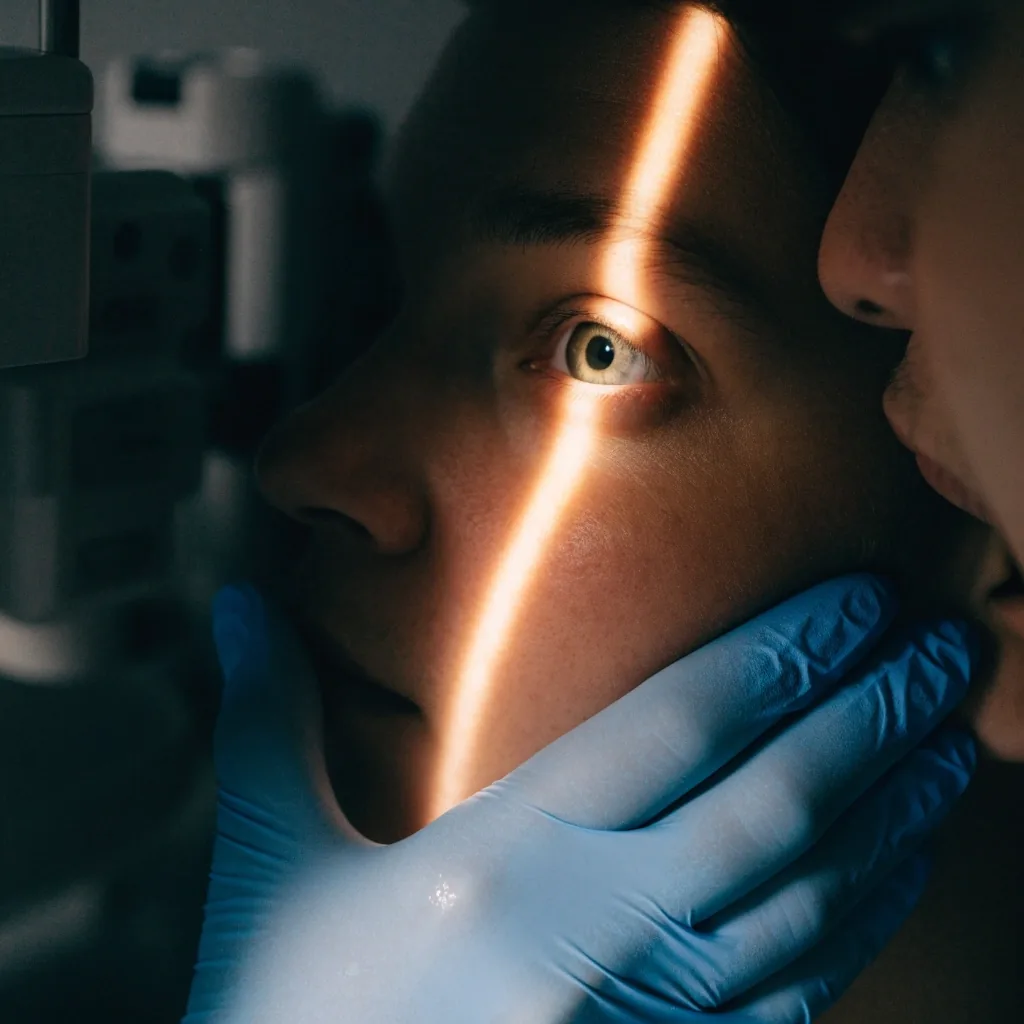
Slit-lamp beam crossing an open eye during a dry-eye check

Dry-eye risk is a pre-existing condition, not a side effect

Most patients who report dryness after surgery already had a borderline surface before it. Blepharitis, meibomian gland dysfunction, long hours on screens and Jakarta's air-conditioned interiors all lower the tear film reserve months in advance. A careful clinic measures this at the consultation: tear break-up time, staining, gland expression, and the quality of the tear film after a controlled blink.

When a dry surface is found, the usual plan is to treat it first — lid hygiene, warm compresses, lubricants, sometimes an anti-inflammatory course — and to re-measure before a procedure decision is made. Choosing a no-flap route can lower the load on the surface, but it does not make a compromised tear film disappear. The same care after surgery applies either way.

Inside the recovery room

The instruments and materials that decide how gently the surface is handled. Swipe through the frames.

Femtosecond laser console fascia lit at night
The platform console — where the pocket, flap or surface pattern is planned.
Excimer eye-tracking optics in extreme close side view
Eye-tracking optics follow the pupil so the laser footprint stays centred.
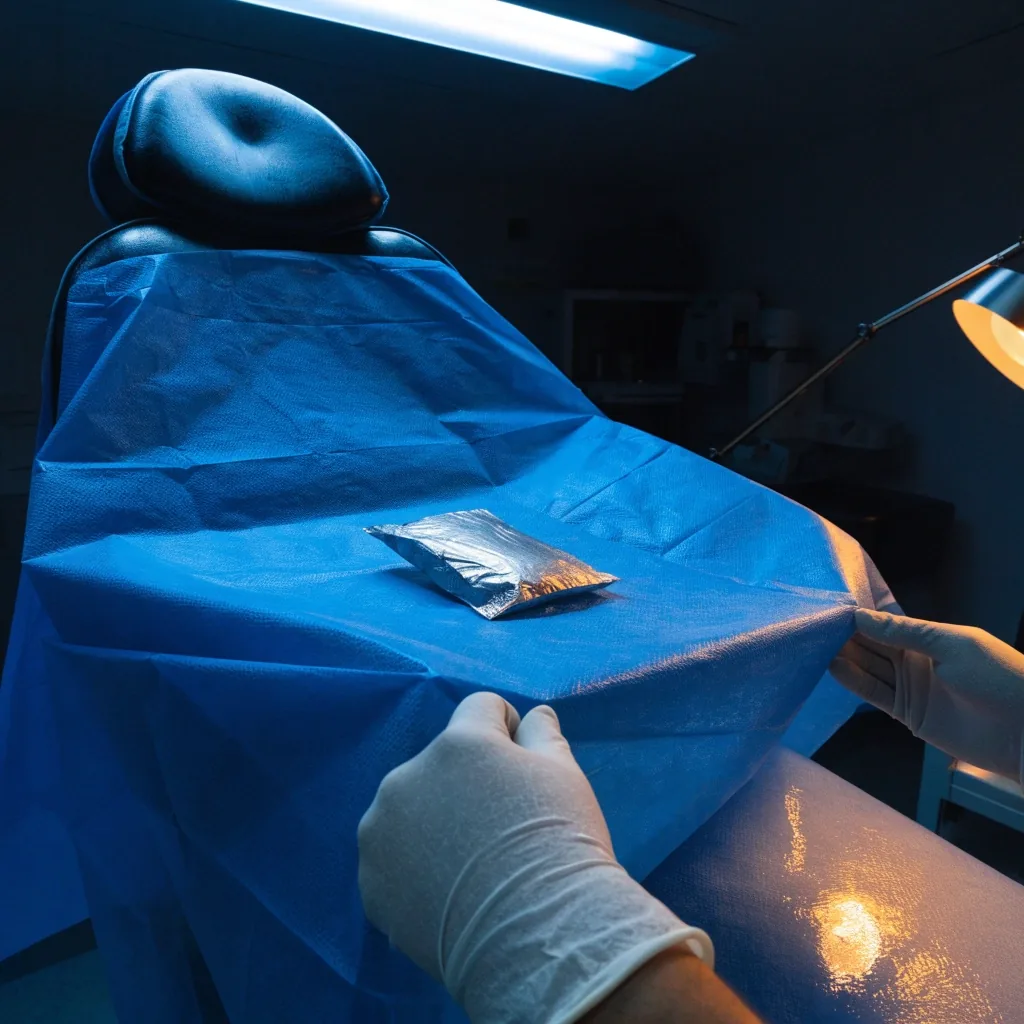
Folded surgical drape with an instrument resting across it
Sterile draping and single-use instruments keep the surface free of contamination risk.
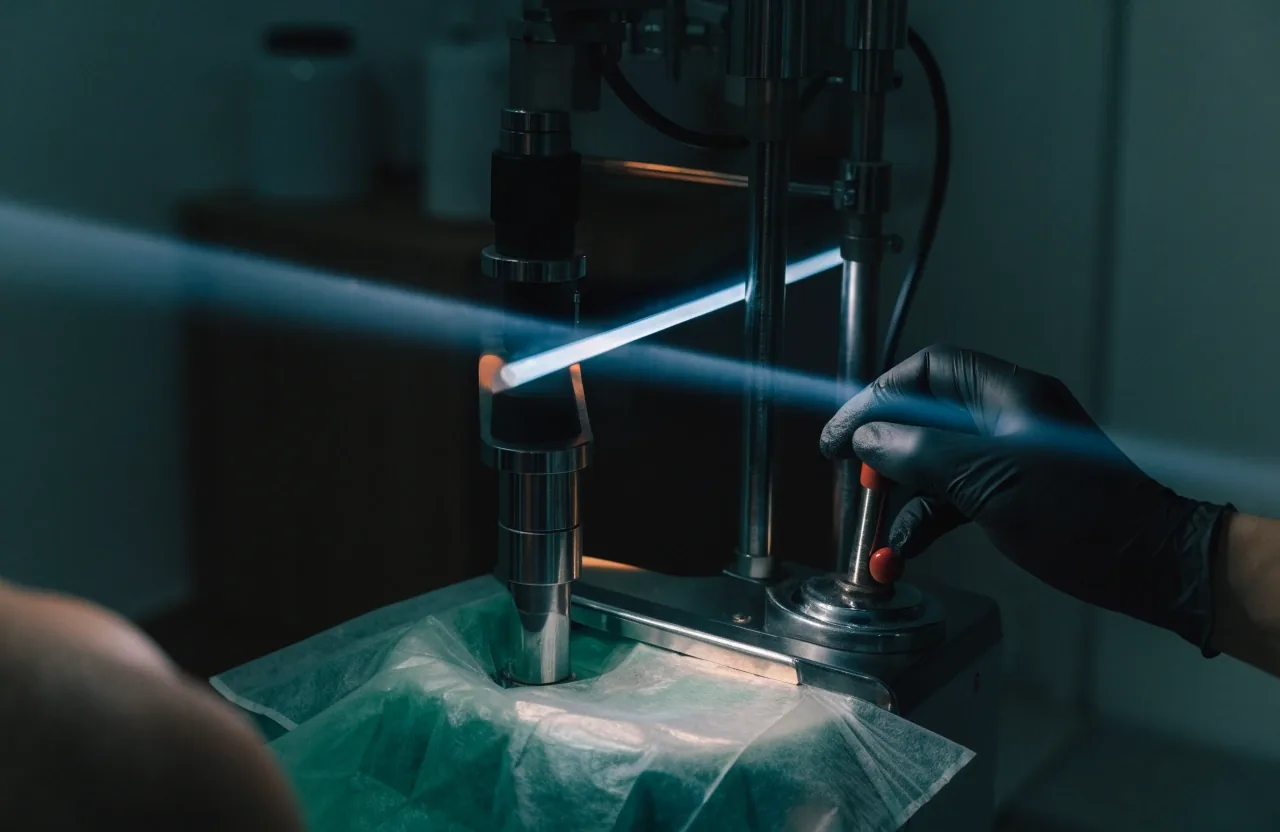
Slit lamp cross-section in a dark clinic room
The slit lamp is where surface health is re-checked at every follow-up.

What matters most is the surface you arrive with, not the label on the procedure.

That is why clinics that treat the surface first tend to report calmer recoveries. If your tear film is strong and your lid glands are healthy, most routes will settle comfortably. If they are not, the plan should address them before surgery — whichever platform is chosen.

Common questions

Practical answers on the surface

Questions patients raise most often when they compare SMILE recovery with the flap-based options.

Can SMILE really reduce dry eye after LASIK-style worry?
How long before the eyes stop feeling scratchy?
Most patients describe a gritty, sandy feeling that fades across the first one to two weeks and is largely gone by the fourth week. Surface-ablation recovery takes longer because the epithelial layer has to regrow and mature. If irritation is still prominent after a month, that is worth discussing at a follow-up rather than managing alone with drops.
Do lubricants have to be used for months?
Frequency drops sharply after the first fortnight for most people. Many clinics still recommend keeping a bottle on hand for long screen days, flights and dry-season weeks, when tear films tend to be tested. Preservative-free formulas are usually suggested when use is frequent, because the preservative itself can irritate a healing surface.
Is flap-based LASIK off the table if I have dry eyes?
Not automatically. A surgeon may still recommend a flap approach if the tear film is treated to a healthy baseline first and if the cornea's shape and thickness suit it. The preoperative conversation usually covers lid hygiene, warm compresses and a short course of anti-inflammatory drops, then re-measures before the decision is made. Where dryness is significant, the no-flap and surface-ablation families often move ahead of a flap in the discussion.
What should I bring to the initial assessment?
Your current glasses or contact-lens prescription, the contact-lens wearing schedule, any dry-eye or allergy medication already in use, and notes on how your eyes feel at the end of a typical working day. Contact lenses usually need to be out for a defined period before the measurements — ask the clinic for the exact number that applies to your lens type.

Where to read next

This page has focused on the outer film. The surrounding chapters fill in the rest of the picture — the platforms themselves, how outcomes are evened out across patients, and how a specific recommendation is drawn up.

Clinic contact

Jl. Cikini Raya No. 58, Menteng, Jakarta Pusat, DKI Jakarta 10330, Indonesia

+62 21 5189 4276

[email protected]

Monday to Friday, 09:00–18:00; Saturday, 09:00–13:00