
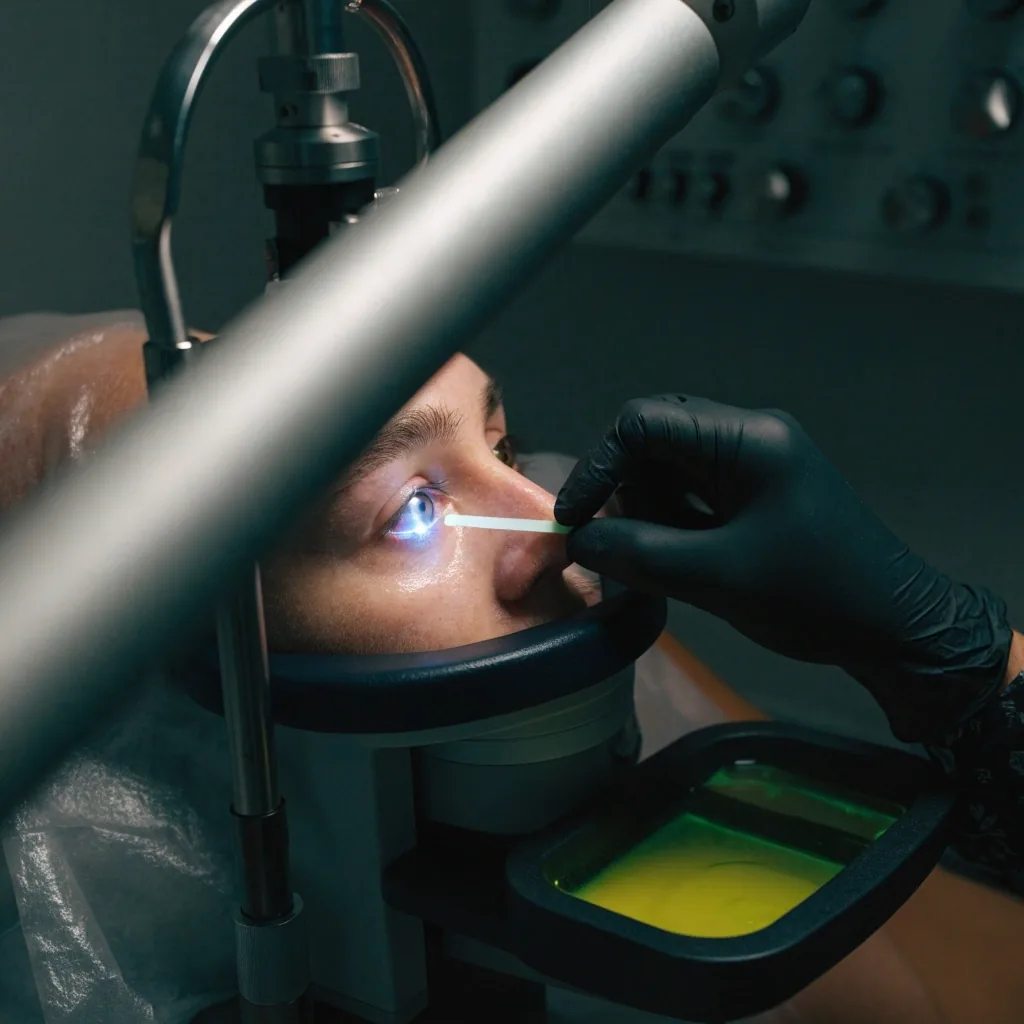
Patient suitability guide
This page walks through the factors a clinician weighs when matching a person to a corrective laser procedure: refractive error, corneal thickness, ocular surface health, tear film, age and daily visual demands.
Perspective Core Hub is an educational resource for patients in Indonesia. Nothing here is a diagnosis or a recommendation for your eyes — it explains what the measurements mean, so the questions you ask at a clinic are sharper.
Comparison summary only. Amber marks the row where a family is usually discussed first; it is not a ranking, and no single column suits every eye. Your own measurements decide which rows apply to you.
Candidacy is a shortlist, not a verdict
People often arrive with two questions: am I allowed to have laser surgery, and which procedure is the right one? Clinicians answer them in that order, but the answers are not a yes-or-no switch. Candidacy is a range with edges, and the edges move depending on the eye in front of the instrument.
Corrective laser surgery suitability is judged from mapped measurements, not from a prescription alone. Two people with the same glasses prescription can sit at opposite ends of the range, because corneal thickness, curvature regularity, tear film stability and the health of the ocular surface are all part of the same decision.
What follows is the same sequence a refractive assessment usually follows: first the numbers that are measured, then the history that is asked about, then the points where a clinician pauses and looks again.
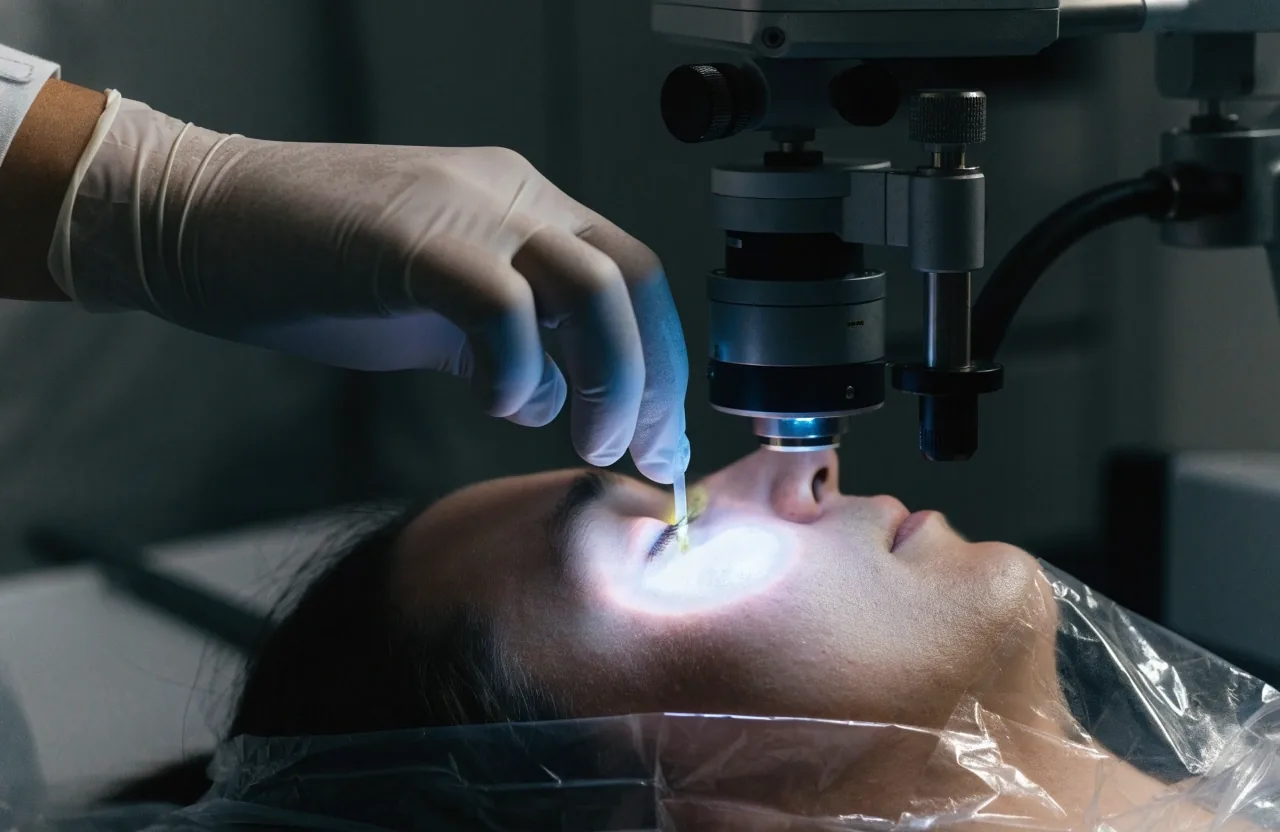
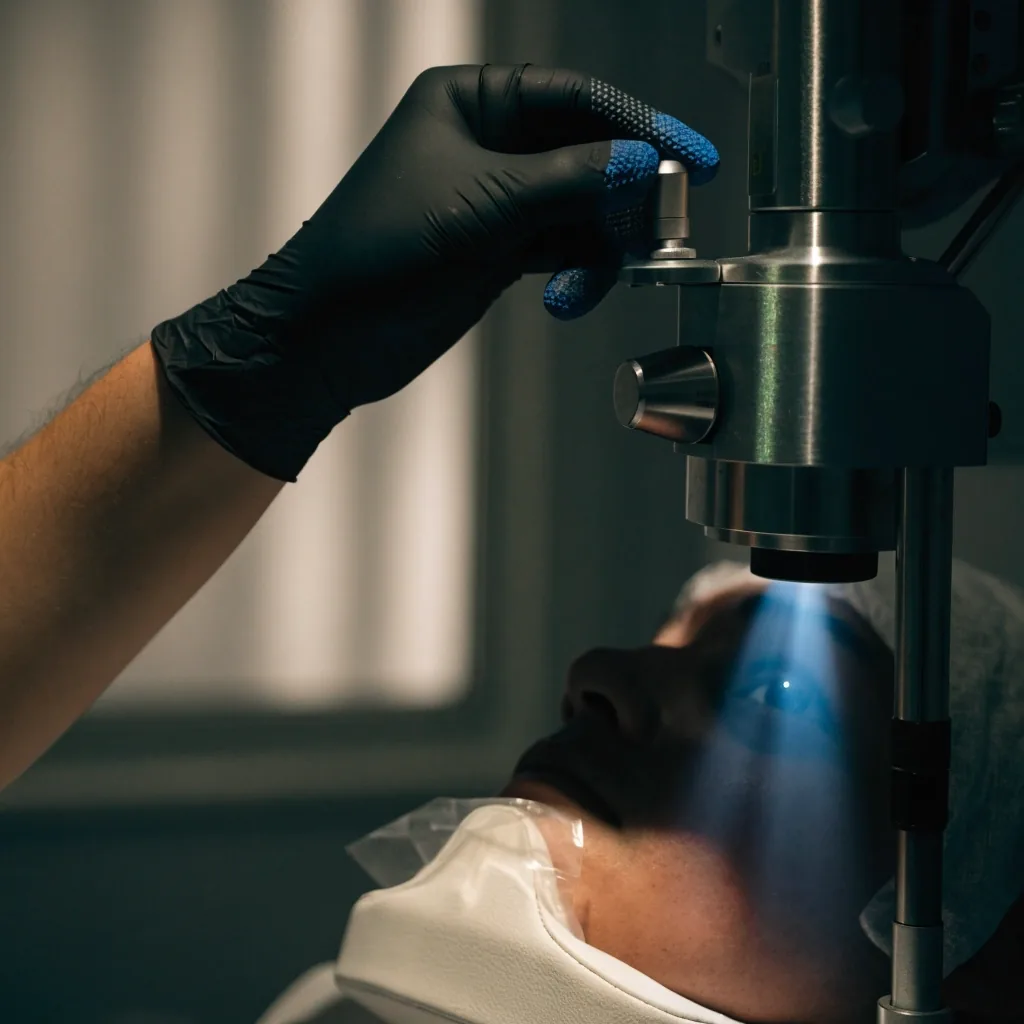
Most assessments begin with corneal mapping and a tear-film check before the prescription is even discussed.
Measurement conditions matter. Contact lens wear is usually paused beforehand, because it reshapes the surface it sits on.
The four things measured first
Every later conversation rests on these four readings. When a clinician says an eye is a good candidate, this is the evidence the sentence is built from.
Refractive error
How much correction is needed
Sphere, cylinder and axis describe the shape of the error. Higher values narrow the list of techniques that can treat the eye within safe limits; low values leave the widest choice. This is also where stable versus changing prescriptions are separated.
Corneal thickness
How much tissue is available
Thickness is mapped across the whole cornea, not sampled at one point. A thin centre, an irregular map or a borderline residual bed is what pushes an eye toward surface techniques — or away from laser reshaping altogether.
Ocular surface and tear film
How the front of the eye behaves
A surface that is already dry, inflamed or unstable is usually treated before any surgery is scheduled. Tear break-up time, staining and lid health belong in this reading, because they influence how the eye will feel and heal afterwards.
Anatomy beyond the cornea
Lens, retina and pressure
A dilated examination checks the crystalline lens, the retina and intraocular pressure. Findings here can change the conversation entirely: a developing cataract or a retinal concern moves the discussion toward other procedures, or toward waiting.
None of these readings is decisive on its own. Refraction without thickness is incomplete; thickness without a surface check misses the most common reason an assessment is postponed.
What the assessment actually looks like
A refractive work-up is quiet and unhurried. It is mostly measurement, a long conversation about daily vision, and a few checks that happen before any decision is proposed.
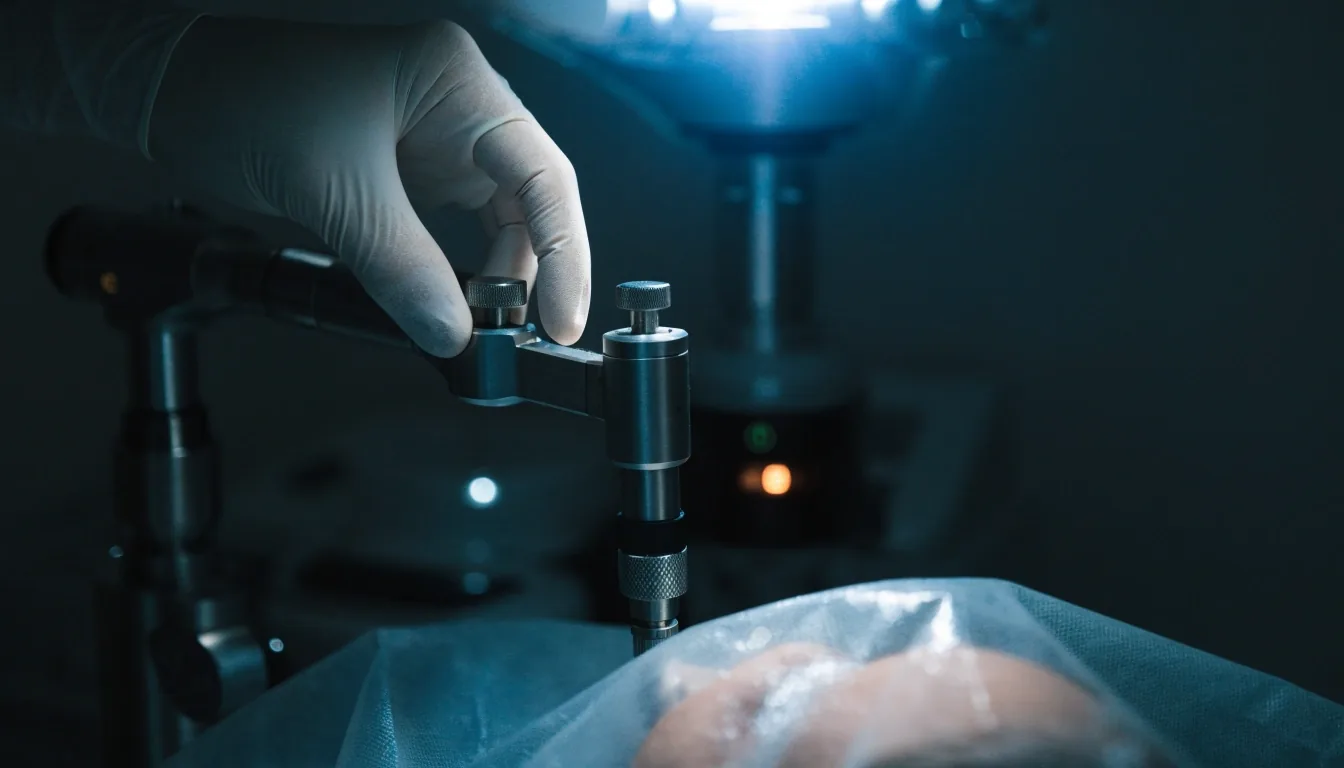
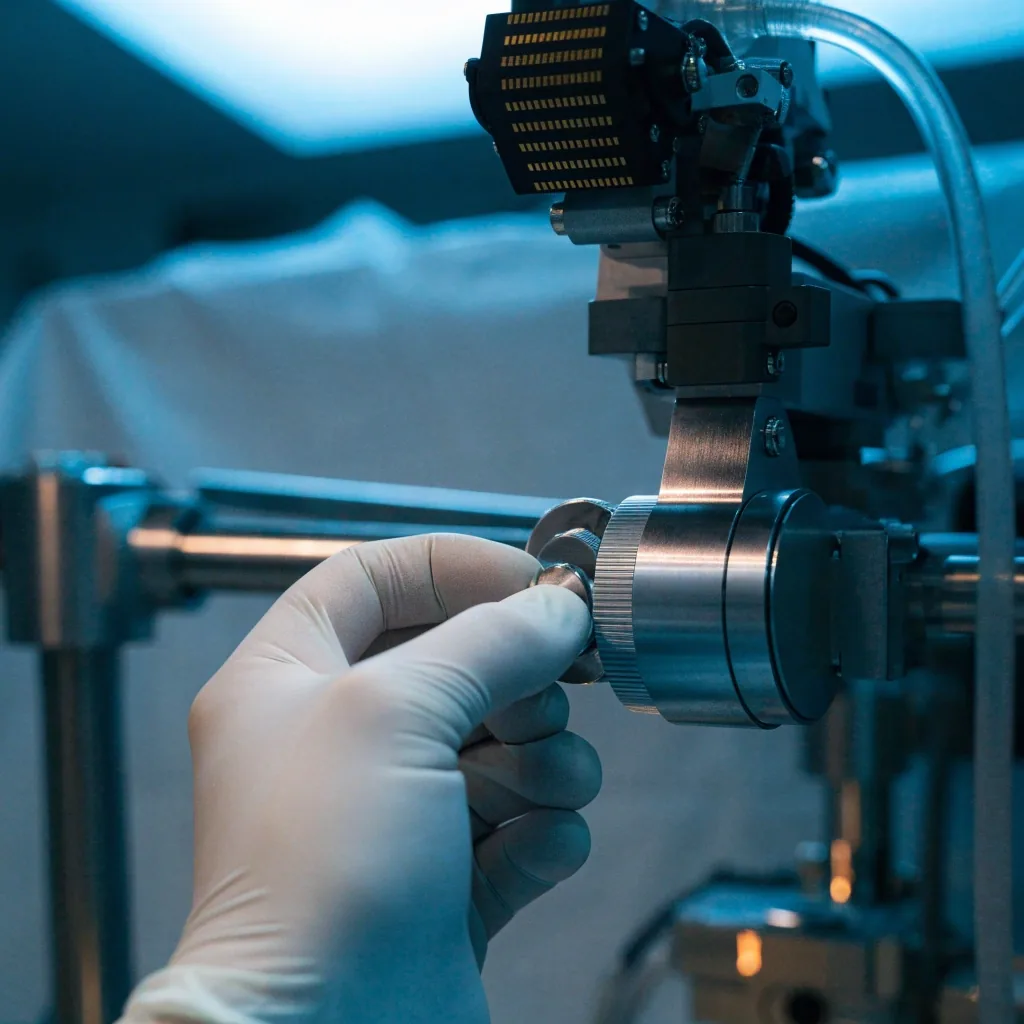

Swipe or scroll horizontally to see the rest of the sequence.
How a suitability assessment usually runs
Clinics differ in equipment and in how many visits they spread the work across. The sequence below is the common shape of a refractive work-up — the order matters, because each step can send the assessment back a stage.
-
Step 1
History and visual demands
The first conversation is not about lasers. It covers prescription history, contact lens habits, medication, pregnancy, general health and what the eyes are actually required to do each day — driving at night, hours at a screen, work in dusty or air-conditioned rooms. Two eyes with identical measurements can receive different advice because of this step alone.
-
Step 2
Refraction
A careful refraction establishes the current error and whether it has been stable. A prescription still moving from year to year is usually a reason to wait rather than treat.
-
Step 3
Corneal mapping
Topography and tomography build a thickness and curvature map of the whole cornea. Irregular patterns here are the single most common reason a laser plan is dropped.
-
Step 4
Surface check
Tear film, staining and lid margins are examined. Dry eye found here is treated first, then the eye is re-measured before any plan is confirmed.
-
Step 5
Dilated examination
The lens, retina and intraocular pressure are reviewed. Findings here can redirect the whole conversation toward a lens-based option or toward simple monitoring.
-
Step 6
Technique shortlist
Only now are the platform options narrowed. The shortlist explains what each technique would mean for this eye, including the parts it cannot correct.
-
Step 7
Second reading
Where an assessment is borderline, clinics often repeat key measurements at a later visit. A second reading on a different day separates a stable finding from a temporary one.
Where suitability runs out
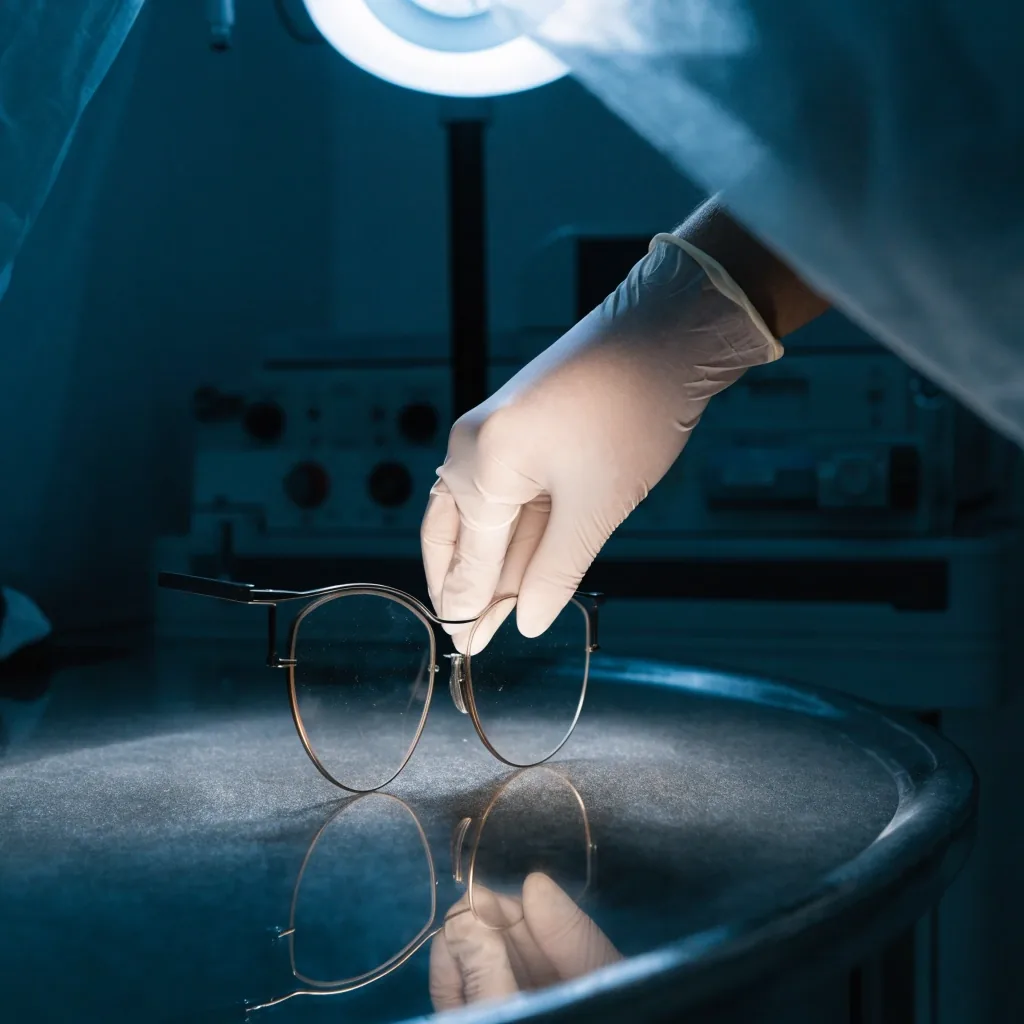
Saying no to laser reshaping is a normal outcome of an honest assessment, not a rejection of the person. The reasons below are the ones that come up most often in refractive clinics.
- Uneven or thinning corneal maps. These raise the risk of weakened corneal structure after tissue removal, so reshaping is usually set aside.
- A prescription that is still changing. If the error has moved in the last year, treating now risks treating the wrong number.
- Uncontrolled dry eye or surface disease. Operating on an inflamed surface affects comfort and healing, so the surface is treated and re-checked first.
- Pregnancy, breastfeeding or some medications. Hormonal and pharmaceutical changes can alter refraction and tear film, so plans are usually postponed until things settle.
- Certain general health conditions. Autoimmune and connective-tissue conditions, and some corneal dystrophies, change the balance of risk enough that laser reshaping is not the route chosen.
When a laser route is closed, the conversation usually does not end. Lens-based options, refractive lens exchange in suitable eyes, or a corrected glasses and contact lens routine are discussed instead, based on the same measurements.
The point of a suitability guide is not to say yes or no. It is to make sure the yes or the no is based on your eye, measured on the day.
Questions people ask about candidacy
These are the boundaries most patients want clarified before they book an assessment. They are general answers; a clinician applies them to your own measurements.
ContactWhat age is suitable for corrective laser surgery?
Most clinics consider laser reshaping once the prescription has been stable for about a year, which in practice is usually the early twenties onward. There is no fixed upper age: what matters is the health of the cornea and the lens, not the birth year. Someone in their fifties with a stable refraction and a healthy cornea can still be a candidate; someone younger with an irregular map cannot.
How thin is too thin for the cornea?
There is no single number printed on every clinic's wall. What is judged is the residual bed left beneath the treated zone after the correction is applied — that is, whether enough untouched tissue remains for the cornea to stay structurally sound. A thin cornea combined with a high correction removes more tissue and tightens the margin. Surface techniques that leave the deeper layers intact, or a lens-based route, are often the options discussed in those cases.
Can I be assessed if I have dry eye?
Yes — and it is worth doing, because sensitivity to dryness is both a reason to be assessed carefully and one of the few symptoms that can be improved before surgery. Treating the surface first, then re-measuring, gives a truer picture than assessing an inflamed eye on a bad day. Some people are assessed, treated for the surface, and cleared later; others are steered toward a technique with a gentler effect on the tear film.
Do contact lenses affect the measurements?
They can, and clearly. A contact lens moulds the cornea it sits on, so a map taken too soon after a period of wear can look flatter or more irregular than the eye really is. Soft lenses are typically paused for several days before mapping, and rigid lenses for considerably longer. A clinic will confirm the exact pause that suits the lens type and wear pattern.
What if I am not a candidate for laser surgery?
Then the assessment has done its job. Being turned away from a laser route is not the same as having no options: lens-based procedures, a refined glasses and contact lens routine, or simply reviewing the prescription regularly are all legitimate plans, depending on the reason laser was set aside. What matters is that the reason is explained in terms of your measurements, not as a general rule.
Reading this is the first step, not the decision
Suitability is settled in an examination room with your own measurements on the screen. If you want the same factors explained in more depth before you book, the comparison page sets the platform families side by side, and the technology page explains what the instruments in the room actually measure.
Perspective Core Hub is an educational resource. We do not diagnose, and nothing here replaces an assessment carried out by a qualified clinician who can see your cornea.
Clinic hours
Monday to Friday, 09:00–18:00. Saturday, 09:00–13:00.
Jl. Cikini Raya No. 58, Menteng, Jakarta Pusat, DKI Jakarta 10330, Indonesia